





Qtr 1 | 2025
In this Issue:
-
The Buzz: AI Governance
-
Service Highlight: Consulting services
-
Business Stats: 2025 small business trends
-
Tech Tips and tricks: microsoft MFA enforcement
THE BUZZ – ai governance
 AI Risks for Small Businesses
Security Threats, Intellectual Property Theft, Policy Gaps
As small businesses increasingly adopt AI technologies, they face critical risks surrounding security, intellectual property protection, and policy management. This article highlights these challenges and underscores their profound implications for businesses in today’s competitive environment.
Security Vulnerabilities
Data Breaches
Data breaches pose a significant threat, particularly when AI systems that manage sensitive information become prime targets for cybercriminals. The consequences of these breaches can be devastating, leading to substantial financial losses, legal repercussions, and severe damage to an organization’s reputation. Alarmingly, 43% of cyberattacks focus on small businesses, which face an average breach cost of $2.98 million (Verizon, IBM 2021). Organizations must recognize the urgency of safeguarding their data and take proactive measures to prevent such costly incidents.
 AI Model Attacks
Adversarial AI model attacks pose a significant threat, capable of manipulating outputs and undermining critical decision-making processes, ultimately resulting in substantial financial losses. Alarmingly, a report by Microsoft (2020) reveals that 25% of businesses leveraging AI have fallen victim to security breaches, highlighting the urgent need for strengthened defenses against such threats.
Insider Threats
Insider threats pose a significant risk, as employees misusing AI systems can lead to devastating data leaks, legal liabilities, and costly investigations. A study by Verizon in 2020 revealed that 30% of data breaches are perpetrated by internal actors. This highlights the urgent need for organizations to safeguard against insider threats and bolster their security measures.
Intellectual Property (IP) Theft
AI-Generated IP Vulnerabilities
The vulnerability of AI-generated intellectual property (IP) stems from ambiguous ownership, which can jeopardize unique assets and trigger costly legal disputes. Remarkably, between 2013 and 2019, patent applications related to AI surged by an astonishing 175% (WIPO). This significant rise underscores the urgent need for clear guidelines and protections in the rapidly evolving landscape of AI technology.
Industrial Espionage
Industrial espionage represents a grave threat involving the illicit theft of vital business intelligence concerning artificial intelligence (AI). Such acts can result in significant losses of competitive advantage and market share for companies. Interestingly, the Commission on the Theft of American Intellectual Property estimates that intellectual property theft costs the U.S. economy an astounding $600 billion annually. This staggering figure underscores the urgent need for robust measures to safeguard against such threats and protect the integrity of American innovation.
Internal AI Policies
Undefined AI Governance
The absence of strong AI governance can lead to inconsistent applications, ethical failures, and significant quality control challenges. Only 30% of companies have established an AI ethics policy (KPMG 2020). This highlights a critical gap that must be addressed to ensure responsible and effective AI deployment.
 Inadequate Employee Training
Insufficient employee training and a shortage of AI skills can result in critical tool misuse, costly errors, and heightened vulnerability to cyberattacks. Alarmingly, 55% of businesses cite a lack of AI skills as a major barrier to adoption (O’Reilly, 2021). Organizations must prioritize training to harness AI effectively or risk falling behind in an increasingly competitive landscape.
Compliance Risks
Non-compliance with AI regulations represents a significant compliance risk that can result in severe penalties, unexpected retroactive costs, and disruptions to business operations. With the increasing importance of regulatory adherence, it is anticipated that by 2024, 75% of large enterprises will invest in hiring AI specialists to safeguard their brand and reputation (Gartner). Embracing this proactive approach is crucial for navigating the complex landscape of AI governance and protecting the future of their businesses.
Mitigation Strategies
- Invest in AI-specific cybersecurity measures.
- Develop strategies to protect AI-generated IP.
- Establish comprehensive internal AI governance policies.
- Provide ongoing AI training for employees.
- Stay informed about and enforce compliance with AI regulations.
By proactively addressing these risks, small businesses can harness the power of AI more effectively, positioning themselves for success while minimizing potential downfalls in today’s fast-evolving technological world.
Service Highlights
 Consulting Services
for AI Governance
Our expert consultants are ready to empower your small business with robust AI compliance strategies. If you’re navigating the world of AI for the first time and want to implement systems ethically and legally, we are your trusted partners! We will work closely with you to establish comprehensive policies, ensure compliance, and pinpoint potential risks associated with AI usage.
 Expert Guidance You Can Trust
Leverage our in-depth knowledge of AI governance best practices. We are here to help you tackle complex issues such as data privacy, bias mitigation, and regulatory compliance with confidence.
Customized Solutions Just for You
We understand that every business is unique. That’s why we assess your needs and craft a customized AI governance plan that perfectly aligns with your company’s goals and operations.
Mitigating Implementation Risks
Avoid the legal and ethical pitfalls of AI implementation! Our team proactively identifies potential risks, ensuring your path to the adoption of AI is smooth and secure.
 Cost-Effective Expertise
Building an in-house AI governance team can be a significant investment, especially for small businesses. Instead, we save time and resources by hiring our consultants for a fraction of the cost while gaining access to top-tier expertise.
 A Proven Track Record
Team with our consultants for your AI governance, with a deep understanding of data privacy laws and ethical AI guidelines. We communicate complex AI concepts clearly and collaborate seamlessly with your team.
Elevate your AI ambitions with us! We craft customized AI solutions that foster innovation and deliver tangible results. Contact us today to begin your AI journey!
Cybersecurity is 20 percent technology and 80 percent process. -Ginni Rometty
Business Stats: 2025 trends

2025 Small Business Trends
Technology has made it easier to start an online business, and the e-commerce market is expected to grow to nearly $11 trillion by 2025.
The pandemic made remote work a necessity, and many employers plan to continue it long term. Forbes predicts that 70% of the U.S. workforce will work remotely at least five days a month by 2025.
Customers are becoming more environmentally conscious and socially responsible, and they prefer to support brands that share these values.
IoT has the potential economic impact of up to $1.6 trillion in the health and fitness sector globally by 2025.
To thrive in 2025, small businesses must proactively embrace the trends that will shape the future of the marketplace. To remain competitive, prioritize robust financial planning, expand into e-commerce, and adopt cutting-edge technologies like AI. Harness the power of data-driven strategies to make informed decisions that can propel your business forward.
Are you ready to align your business for success in 2025? We are here to help you on this journey!
Your DCR Team – Behind the Scenes
Birthdays
 |
 |
| Tava 01/09 | Heather 03/17 |
wORK Anniversaries
|
 |
|
Tava 03/19 – 5 years
|
Robert 02/21 – 19 years |

Congratulations, drake!
We are pleased to announce that Drake has been promoted to Support Level II! He is enthusiastic about technology and has embraced his new role, demonstrating a remarkable ability to learn quickly and effectively. We are confident that his skills and dedication will continue to make him an invaluable asset to our team and yours!

2024 Best of Leflore County
Computer Services

Arcserve Certified Engineer – UDP Certification
Robert has recently completed the Arcserve Academy training and certification program, which offers self-paced e-learning courses and instructor-led training designed to help technicians configure and manage the Arcserve product line. As a result of this training, he has earned the Arcserve Certified Engineer – UDP certification. This certification demonstrates his expertise in configuring, managing, and troubleshooting Arcserve Unified Data Protection (UDP) software, indicating that he is well-prepared to enhance your data resilience with Arcserve UDP.
Congratulations, Robert! This achievement is well-deserved!
TECH TIPS
MFA Enforcement Requirement

Microsoft has set a deadline of September 30, 2025, for all Microsoft 365 tenants to comply with new Entra-based authentication policies. These policies will be rolled out in phases across all tenants and will require mandatory Multi-Factor Authentication (MFA). Every user who accesses any Microsoft Online service or admin center must set up MFA to ensure compliance. While this requirement will not affect a small percentage of users, Microsoft strongly recommends that MFA be enabled for all users. As your IT consultants, we advise enforcing this requirement for everyone, as most users will be impacted, and a single rollout will minimize disruption. We will begin contacting clients in April to discuss migrations and provide assistance as needed. For a list of Microsoft Online services and admin centers, please refer to the end of this article.
Why is MFA Being Enforced?
Microsoft is committed to continuously enhancing security for all our users and customer organizations. One of the pillars of the Microsoft Secure Future Initiative is to protect identities and secrets, and multi-factor authentication (MFA) is a proven approach to reduce the risk of unauthorized access to user accounts substantially.
What is MFA?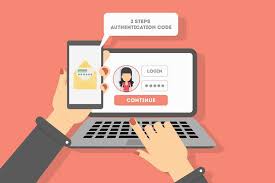
Multi-factor authentication (MFA) is a security feature that requires you to provide two or more pieces of evidence to prove your identity when you sign in to an online service. These pieces of evidence can be something you know (such as a password or a PIN), something you have (such as a phone or a security key), or something you are (such as a fingerprint or a face scan). Research by Microsoft shows that MFA leads to a 99.22% reduction in the risk of account compromise.
What to Expect
 Impact on Users:
All users who access the admin center and Microsoft Online services will be required to set up MFA upon their first login attempt after the enforcement date.
Admin Responsibility:
Administrators must thoroughly review and manage the MFA settings for all users, ensuring that every individual has registered a reliable verification method.
Phased Rollout:
Microsoft will implement MFA enforcement in phases, providing initial notifications and a grace period before full enforcement is enforced.
Access Restrictions:
Users who have not set up MFA will be temporarily blocked from accessing certain Microsoft 365 services.
Recommended Action
Review Current MFA Status:
Assess how many users have MFA enabled and identify those who still need to set it up.
Communicate with Users:
Notify all employees about the upcoming MFA requirement and provide clear instructions on how MFA works so they will know what to expect going forward.
Test MFA Methods:
Verify that all users can access and utilize their preferred MFA methods, such as the Microsoft Authenticator app, SMS, or security key.
Consider Conditional Access Policies:
If necessary, establish policies to enforce MFA based on specific conditions, such as user location, device type, or role.
We highly recommend that admin users who are unfamiliar or uncomfortable with MFA settings, setting up verification methods, testing MFA methods, or establishing conditional settings do not attempt implementation. Starting April 1, 2025, we will reach out to all clients that will be affected to discuss your migration and assist as needed to ensure that your team experiences no disruption or downtime.
If you have any questions or concerns regarding the MFA requirement, please call (918) 436-1830.
Microsoft Online services & admin centers affected by enforcement:
| Microsoft 365 admin center | Microsoft Entra admin center | Microsoft Intune admin center |
| Azure Portal | Microsoft 365 or Office 365 | Outlook Web |
| Microsoft 365 for mobile apps | Office 365 Web | Teams Online |
| SharePoint Online | OneDrive | Azure mobile app |
| Exchange Online | PowerShell Online | Azure Command Line Interface |
| Azure Infrastructure as Code | Planner | Power Platform |
| Dynamics 365 | Viva Engage | Stream |
| Visio Online | Project Online | Loop |
| Copilot |